
It’s estimated that 1 in 20,000 juvenile lobsters survive in the wild.
The European Lobster or Common Lobster (Homarus Gammarus) is a species of clawed lobster from the eastern Atlantic Sea, Mediterranean Sea, and parts of the Black Sea.
It is closely related to the American lobster, H. americanus.
Homarus gammarus is a highly esteemed seafood species and is widely caught using lobster pots around the British Isles.
It may grow to a length of 60 cm (24 in) and weigh up to 6 kilograms (13 lb) and bears a conspicuous pair of claws, lobsters colouration can vary a lot based off their environment.
Mating occurs in the summer, producing eggs that are carried by the female for up to one year.
The eggs usually hatch 9–12 months after fertilisation, releasing planktonic larvae.
Where they live
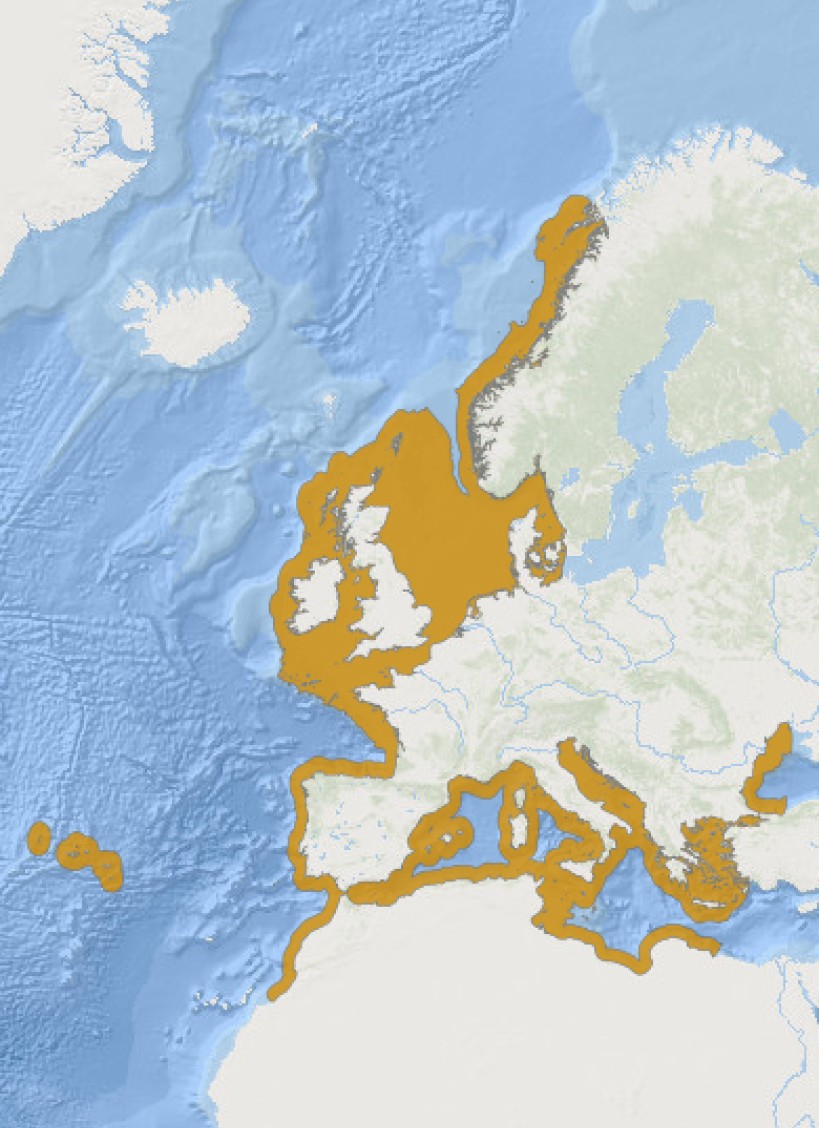
Red List Index (Sampled Approach), Zoological Society London 2011. Homarus gammarus. The IUCN Red List of Threatened Species. Version 2025-2
To understand how a lobster hatchery works it is useful to understand the life cycle of lobsters in their natural environment.
Like many arthropods Invertebrates lobsters have a shell called an exoskeleton.
Lobsters grow by moulting the process by which arthropods shed their old shells to grow.
Lobsters grow by moulting the process by which arthropods shed their old shells to grow.
About once-a-year lobsters’ “slide” out of their old shells. When they emerge, they are very soft, like gelatin, until their new shells harden—which takes about 2 weeks.
The Life Cycle of a European Lobster

Newly hatched larvae are approximately 7 mm in length During this time, lobster larvae pass through four larval stages, moulting and growing a bit each time, and then they settle to the bottom & continue to moult and growing until they become adults.
Keep in mind that temperature has a big impact on all aspects of the lobster life cycle.
It then takes about 5–7 years for them to reach sexual maturity, adult lobsters can live for more than 10 years.

Hatchery reared Stage 3 baby lobster.
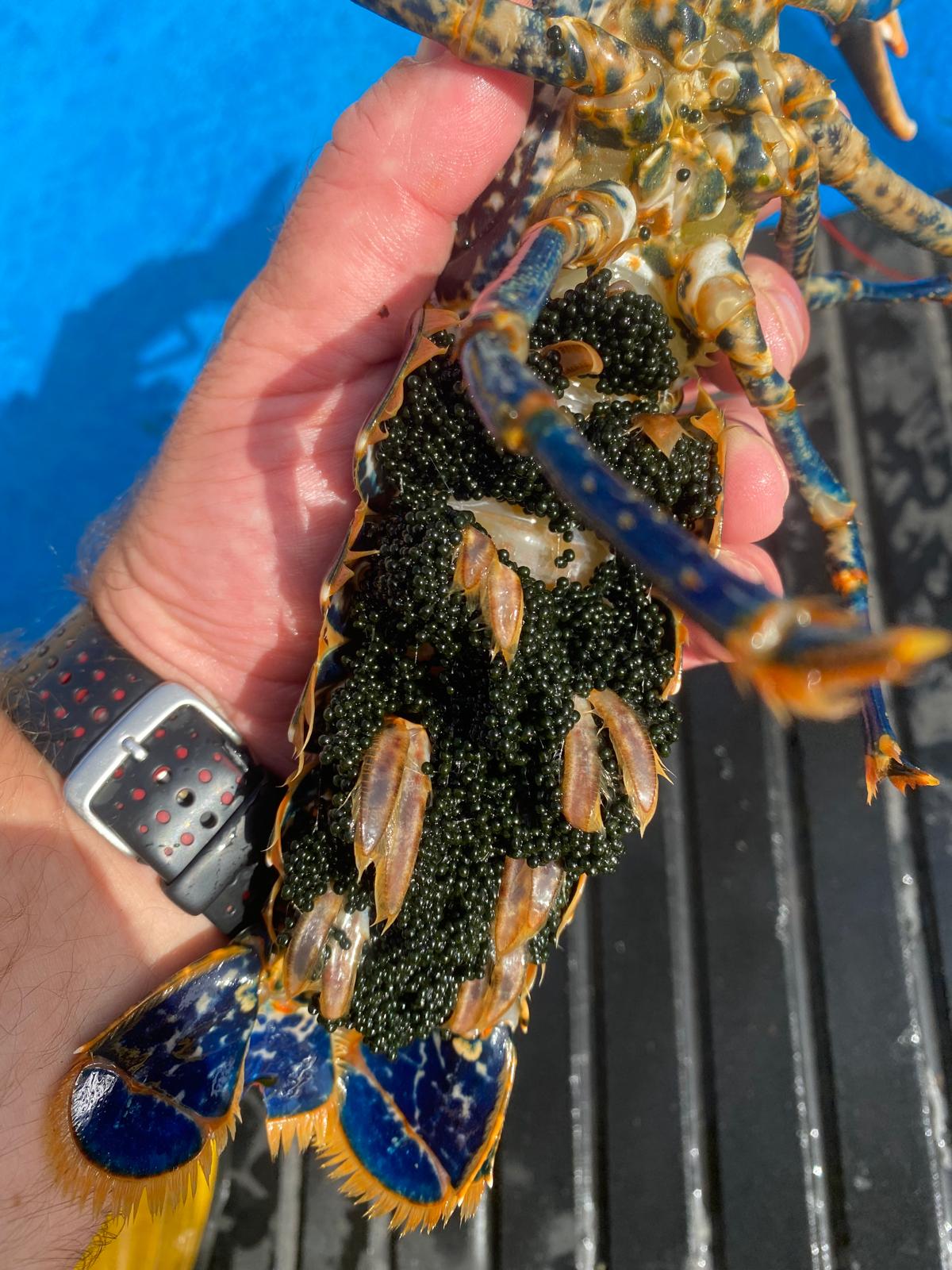
Mature females typically mate just after they molt. Then, after 2–12 months after mating, the female uses her stored sperm to externally fertilize her eggs as she extrudes them, and “cements” them to the underside of her tail newly laid eggs are bottle-green in colour.
Females carrying eggs this way are called Ovigerous Bearing eggs or “berried” females – the eggs below look like little berries, right? female tends the eggs under her tail, removing diseased or dead material.
V notched female lobster ready to go back into the sea.

Eggs cemented to the abdomen of a female lobster.
In early summer, the eggs finally hatch. Lobster eggs usually hatch at night, and at this stage the larvae are attracted to light. They swim upwards toward the surface of the water, where they find food in the form of phytoplankton and zooplankton. which are tiny animals carried by ocean currents. This larval stage lasts for about 20–30 days. The exact timing of hatching depends on the water temperature—warmer water causes the eggs to develop more quickly.

These eggs are almost ready to hatch. The dark spots you can see on some of the eggs are the eyes of the larvae.